

The Mieko Residences
Wellbeing. Home. Belonging.
From Melbourne to the world.
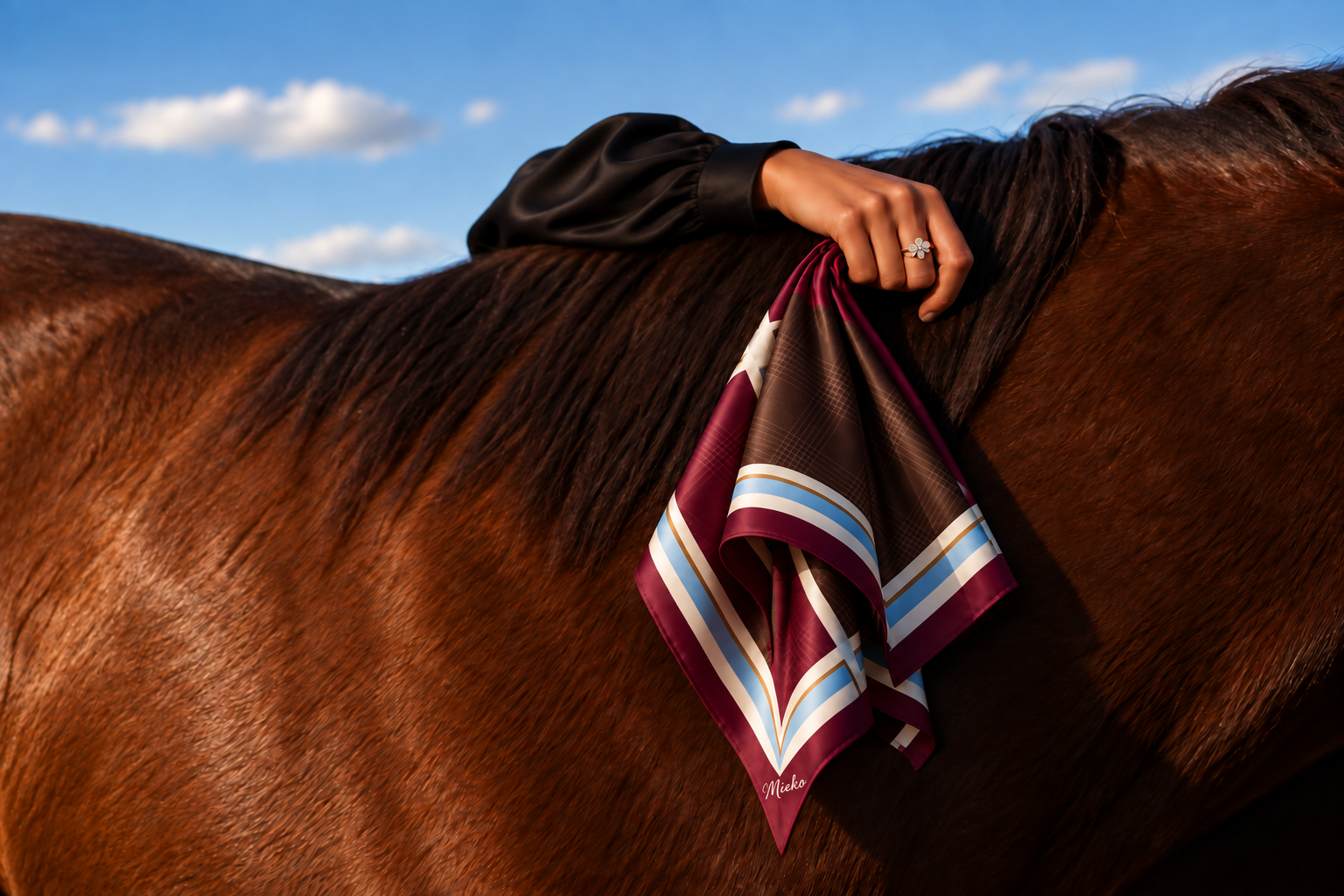
The Equestrian
Stories from the world of horses — Sport, Culture & Sagacité.
For those who understand the world differently through horses.
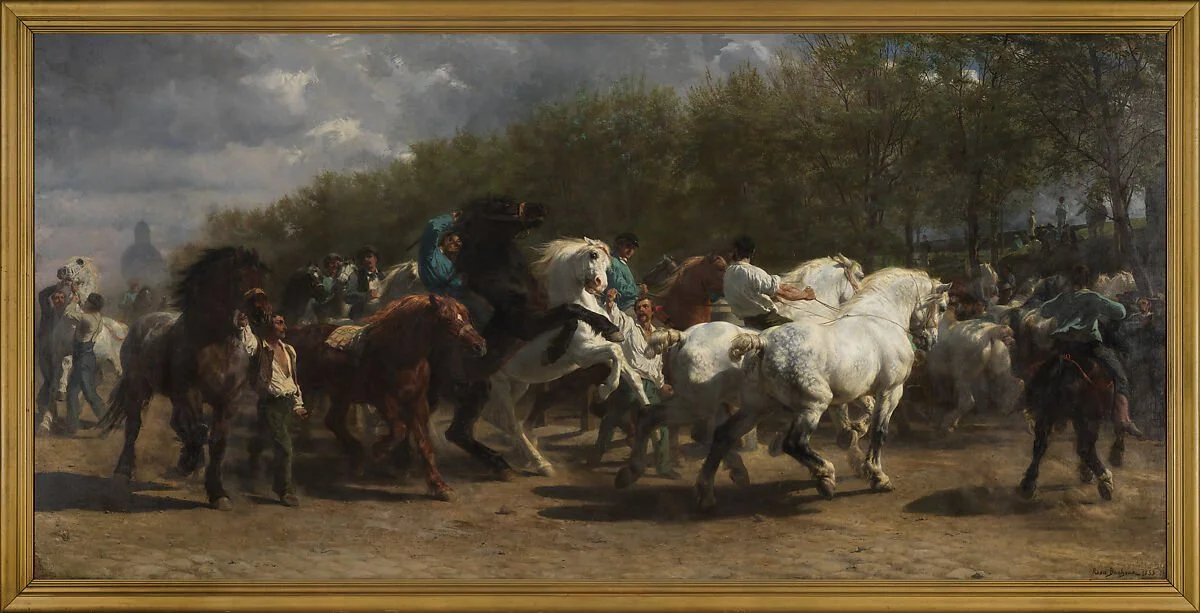
Photo: Rosa Bonheur, The Horse Fair (Le Marché aux chevaux), 1852–1855. Oil on canvas. The Metropolitan Museum of Art, New York.
CULTURE
The Woman Who Understood Horses
At the Château de Chantilly, an exhibition revisits Rosa Bonheur, the nineteenth-century artist who made the horse both her subject and her muse.
There are artists who paint horses for their beauty, and others who study them for their strength. Rosa Bonheur understood that the horse possessed something beyond either: a character entirely its own.
Born in Bordeaux in 1822, Bonheur became one of the nineteenth century's most celebrated animal painters. Defying the conventions of her time, she developed an extraordinary command of anatomy, movement and observation, portraying animals with dignity and individuality.
Her fascination with horses found its finest expression in The Horse Fair (Le Marché aux chevaux), exhibited at the Paris Salon in 1853. The monumental painting captures the energy of the Paris horse market, its powerful horses rendered with remarkable precision and vitality. Years of studying animals in their working environments informed her understanding of their movement and temperament.
This autumn, the Château de Chantilly celebrates her legacy with Rosa Bonheur and the Horse, an exhibition bringing together paintings, drawings, photographs and archival materials. Presented across the Musée Condé and the Musée Vivant du Cheval, it explores the artist's enduring relationship with the horse.
Chantilly provides a fitting setting. Bonheur's connection to the estate and its celebrated equestrian traditions places her work within a wider history of art and horsemanship.
Nearly two centuries after her birth, Bonheur's horses remain compelling not because they have been idealised, but because they have been understood.
EXHIBITION
Rosa Bonheur and the Horse
Château de Chantilly, France
12 September 2026 – 3 January 2027
Musée Condé and Musée Vivant du Cheval
SPORT
Flemington Awaits
Four days of thoroughbred racing, tradition and springtime spectacle mark the return of the Melbourne Cup Carnival.
There is a particular anticipation that settles over Melbourne as October draws to a close. At Flemington, preparations are gathering pace for the Melbourne Cup Carnival, four celebrated race days that bring together some of the finest thoroughbreds, leading trainers and jockeys, and an audience drawn as much by the spectacle as by the sport itself.
On Monday 26 October, the Victoria Racing Club will officially launch the 2026 Carnival, marking the beginning of another chapter in one of Australia's most enduring sporting traditions. Hosted by Eddie McGuire and racing presenter Francesca Cumani, the occasion will bring together prominent figures from the racing industry, including Hall of Fame trainer Gai Waterhouse and Melbourne Cup-winning trainer Ciaron Maher.
The unveiling of the Carnival's four feature race trophies, culminating in the Lexus Melbourne Cup, will offer an early glimpse of the honours awaiting this year's contenders. Behind the celebrations lies the anticipation of the racing itself: the preparation of horses, the judgement of trainers, the skill of jockeys and the fine margins that can determine victory on the turf.
Few sporting occasions are as closely woven into the identity of their city as the Melbourne Cup Carnival. Flemington has long been a meeting place for sporting ambition and social ritual, where generations have gathered to witness extraordinary horses and the moments that make racing history. The Carnival's traditions have evolved over time, but its distinctive place in Melbourne's spring calendar remains.
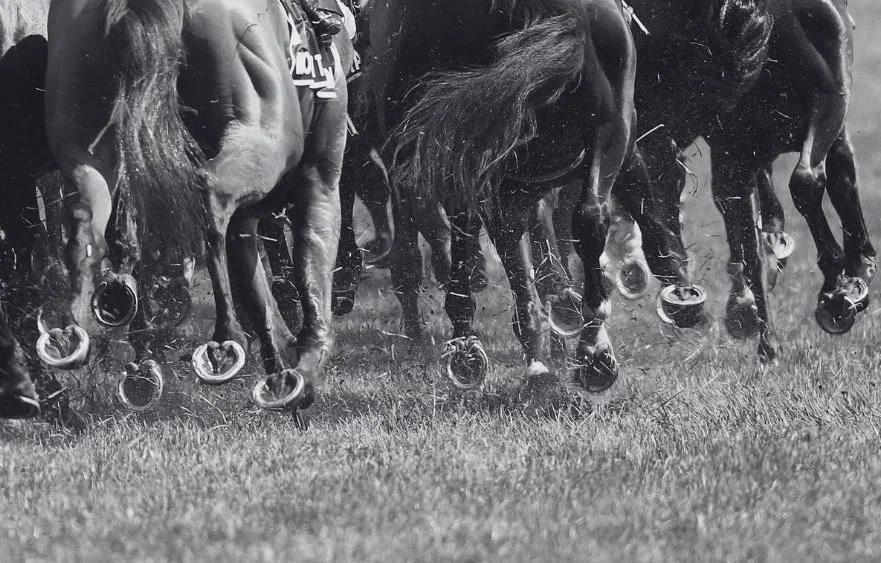
Photo: Victorian Racing Club
Beyond the track, fashion, millinery, hospitality and entertainment contribute to the occasion's character. From the elegance of Derby Day to the excitement of Cup Day, each gathering has its own atmosphere. The result is a rare convergence of sport and style, where the theatre surrounding the racecourse exists alongside the serious business of thoroughbred competition.
The 2026 Carnival begins with Howden Victoria Derby Day on Saturday 31 October, followed by the Lexus Melbourne Cup on Tuesday 3 November, Crown Oaks Day on Thursday 5 November and TAB Champions Stakes Day on Saturday 7 November.
For now, the trophies await their winners, the horses continue their preparations and Flemington stands ready for another spring. Soon, the attention will return to the starting gates — and to the possibility that, somewhere among this year's contenders, another memorable chapter of Australian racing history is waiting to be written.
Adapted for The Equestrian from reporting by the Victoria Racing Club.
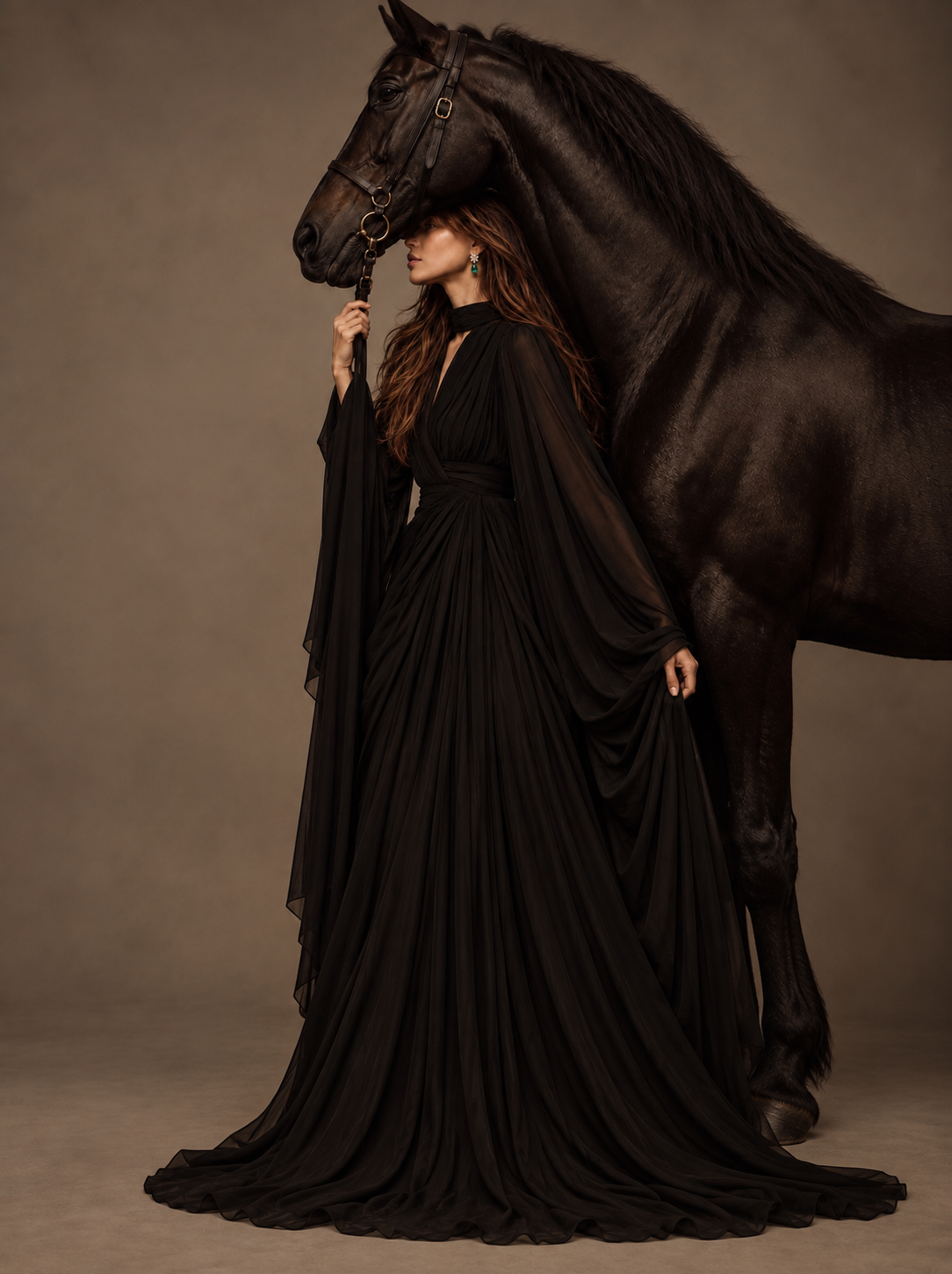
Photo: Sha Mieko with Enzo, for The Equestrian.
Sagacité
The Art of Standing Still
What a horse can teach us when neither of us is going anywhere.
There is no gallop in this photograph. No saddle, no arena, no destination. Enzo is simply standing there, his great head lowered beside mine, and for a moment neither of us appears particularly interested in going anywhere.
For an animal we so often celebrate in motion, there is something remarkable about a horse standing still.
Watch one for long enough and you realise that stillness is not the absence of activity. An ear turns towards a sound. The eyes follow movement at the edge of the field. Weight shifts almost imperceptibly from one leg to another. Another horse moves, and attention moves with it. The body may be quiet while the senses remain very much awake.
Horses evolved as social animals whose survival depended upon awareness of their surroundings and of one another. Even at rest, they remain responsive to what is happening around them. Within a herd, periods of quiet are shared alongside grazing, movement and vigilance. Standing together can itself be part of the social life of a horse.
Perhaps this is why standing beside one feels different from standing beside almost anything else.
We humans are inclined to fill silence. We reach for conversation, activity, explanation. Around horses, none of these is particularly useful. A horse does not require us to make the moment interesting. It asks, if anything, that we become sufficiently quiet to notice it.
Beside Enzo, I become aware of scale: the warmth of another body, the sound of breathing, the occasional movement of an ear. There is communication here, but very little of it belongs to language.
And perhaps that is what horses understand particularly well.
Stillness does not necessarily mean disengagement. Sometimes it means attention. Sometimes rest. Sometimes vigilance. And sometimes, when a horse is comfortable enough simply to remain near another being, it can be something quieter still: company.
We spend so much of life believing that something must be happening for a moment to matter. A horse standing beside you suggests otherwise. Sometimes presence is the entire event.