

The Mieko Residences
Wellbeing. Home. Belonging.
From Melbourne to the world.
The Equestrian
Stories from the world of horses — Sport, Culture & Sagacité.
For those who understand the world differently through horses.
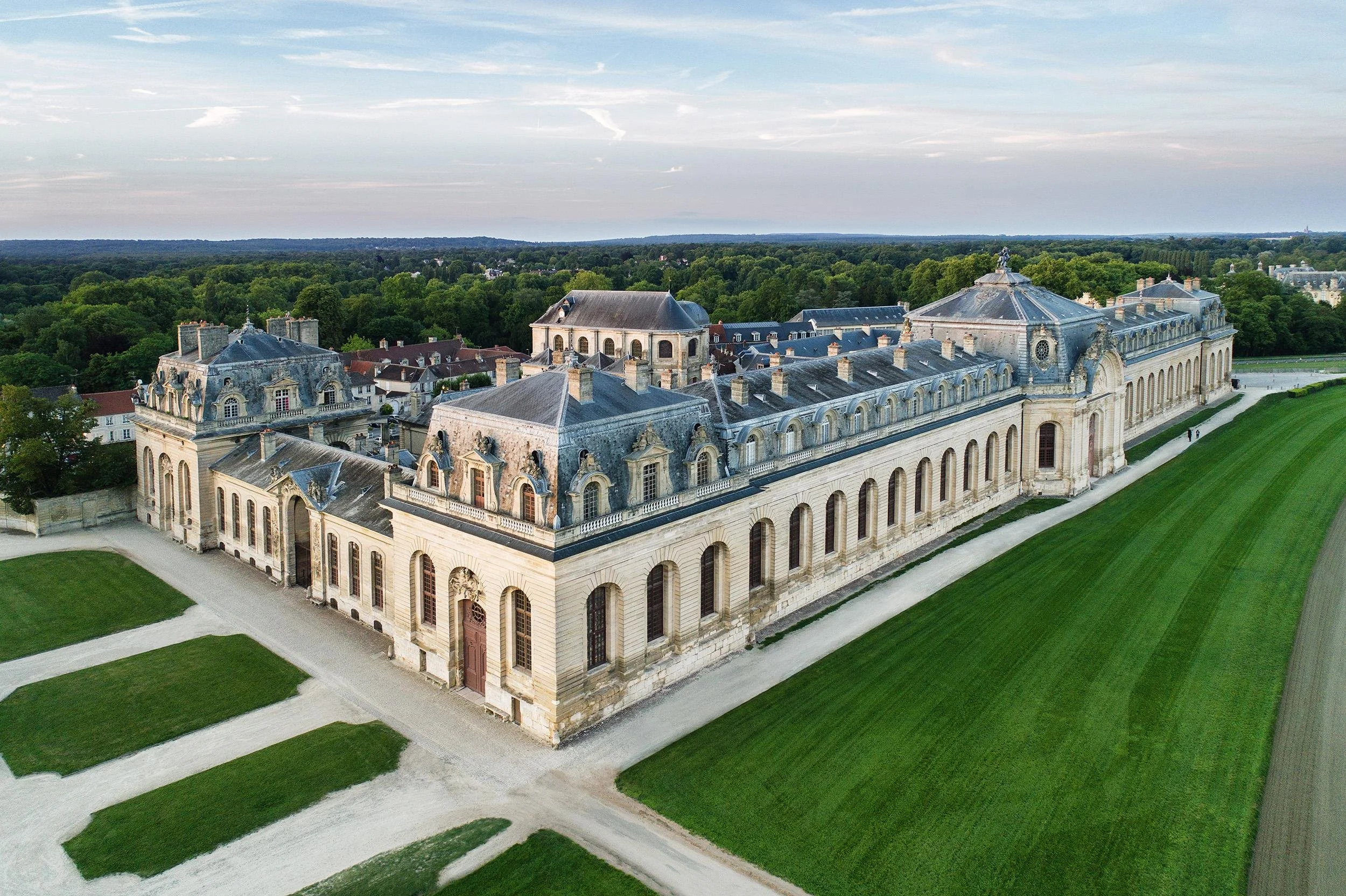
The Grandes Écuries at Chantilly, France — an eighteenth-century monument to equestrian life.
CULTURE
The Great Stables of Chantilly: Architecture for the Horse
In the eighteenth century, Louis-Henri de Bourbon, Prince of Condé, commissioned an extraordinary building at Chantilly, north of Paris. Designed by architect Jean Aubert and constructed between 1719 and 1740, the Grandes Écuries were conceived on a scale rarely afforded to horses. With their monumental proportions, sculptural decoration and imposing central dome, the stables reflected a world in which horsemanship was inseparable from aristocratic life, ceremony and prestige.
The building was more than an elaborate place to keep horses. It belonged to a culture in which riding, hunting and the breeding of fine horses formed part of the identity of the French nobility. Its architecture borrowed the grandeur of palaces, with carefully composed façades and interiors that elevated the everyday rituals of equestrian life. At Chantilly, the horse was not hidden behind the château; it was given an architectural monument of its own.
Centuries later, the Grandes Écuries remain one of France's most remarkable equestrian landmarks. Today, they house the Living Museum of the Horse and continue to accommodate equestrian demonstrations and performances. The building has outlived the aristocratic world for which it was created, yet its purpose remains closely connected to the animal that inspired it.
Perhaps that is what makes Chantilly so compelling. It is architecture built around the importance of the horse — a reminder that equestrian culture has shaped not only sport and tradition, but the buildings and landscapes of European history.
SPORT
A Commanding Start in Oslo
Max Kühner and EIC Up Too Jacco Blue open the 2026/27 Longines FEI Jumping World Cup season with victory in Norway.
Austria's Max Kühner made a commanding start to the 2026/27 Longines FEI Jumping World Cup™ Western European League, riding EIC Up Too Jacco Blue to victory at the Agria Oslo Horse Show.
From a field of 40 starters, just nine combinations advanced to the jump-off. The contest came down to fractions of a second, with Kühner crossing the finish in 40.52 seconds, ahead of the Netherlands' Harrie Smolders and Monaco in 41.51. Switzerland's Martin Fuchs and Fortjump du Beaumenil completed the podium in 41.53.
For Kühner, the victory was as much a testament to partnership as it was to speed. Years of understanding with Jacco Blue allowed him to make decisive adjustments around the shortened course, finding the balance between precision and pace. The result earned him 20 points and the early lead in the Western European League standings.
With Oslo's opening chapter complete, attention turns to Lyon on 1 November, as Europe's leading combinations continue their pursuit of a place at the World Cup Final in Gothenburg next March. For Kühner, the campaign could hardly have begun more convincingly.
Adapted for The Equestrian from reporting by the Fédération Equestre Internationale
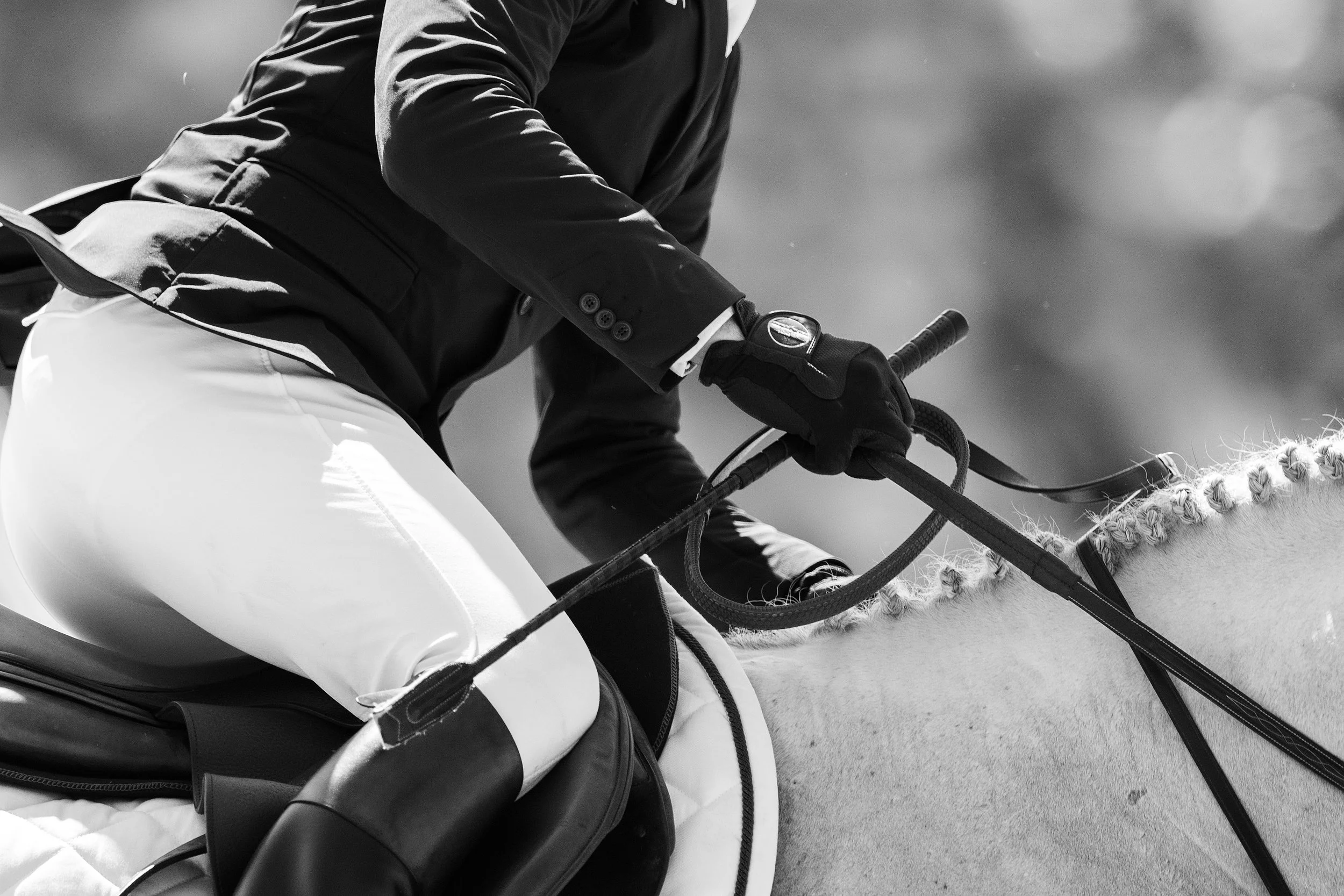
Photo: Fédération Équestre Internationale
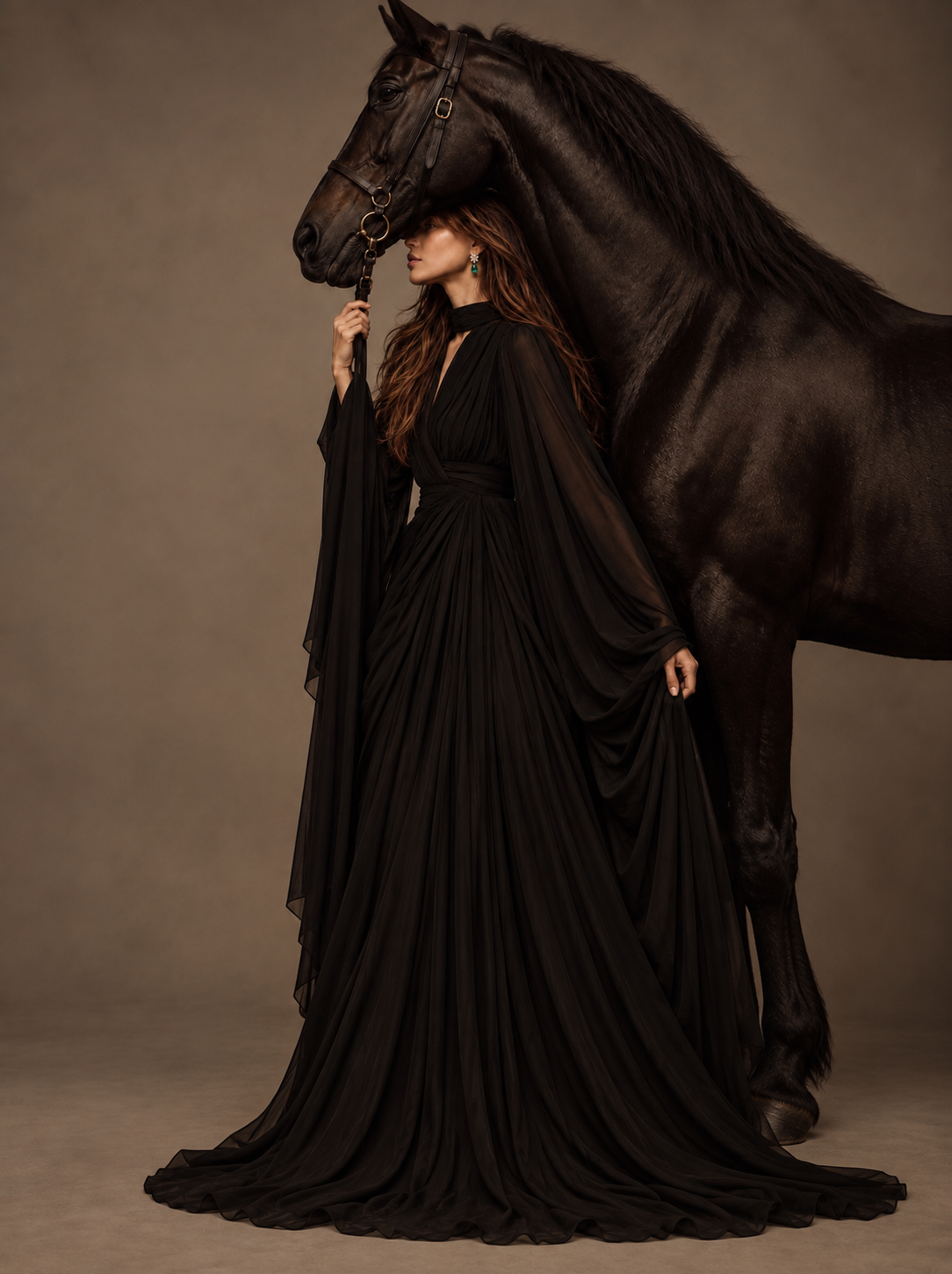
Photo: Sha Mieko with Enzo, for The Equestrian.
Sagacité
The Art of Standing Still
What a horse can teach us when neither of us is going anywhere.
There is no gallop in this photograph. No saddle, no arena, no destination. Enzo is simply standing there, his great head lowered beside mine, and for a moment neither of us appears particularly interested in going anywhere.
For an animal we so often celebrate in motion, there is something remarkable about a horse standing still.
Watch one for long enough and you realise that stillness is not the absence of activity. An ear turns towards a sound. The eyes follow movement at the edge of the field. Weight shifts almost imperceptibly from one leg to another. Another horse moves, and attention moves with it. The body may be quiet while the senses remain very much awake.
Horses evolved as social animals whose survival depended upon awareness of their surroundings and of one another. Even at rest, they remain responsive to what is happening around them. Within a herd, periods of quiet are shared alongside grazing, movement and vigilance. Standing together can itself be part of the social life of a horse.
Perhaps this is why standing beside one feels different from standing beside almost anything else.
We humans are inclined to fill silence. We reach for conversation, activity, explanation. Around horses, none of these is particularly useful. A horse does not require us to make the moment interesting. It asks, if anything, that we become sufficiently quiet to notice it.
Beside Enzo, I become aware of scale: the warmth of another body, the sound of breathing, the occasional movement of an ear. There is communication here, but very little of it belongs to language.
And perhaps that is what horses understand particularly well.
Stillness does not necessarily mean disengagement. Sometimes it means attention. Sometimes rest. Sometimes vigilance. And sometimes, when a horse is comfortable enough simply to remain near another being, it can be something quieter still: company.
We spend so much of life believing that something must be happening for a moment to matter. A horse standing beside you suggests otherwise. Sometimes presence is the entire event.